Real-World Review: Embroidery Cup Clipart Bundle
As a designer who has spent years staring at digitized files and watching needles punch through fabric, I have learned that not all graphics translate well to thread. We often see beautiful Illustrations and Graphics online that look stunning on a screen but turn into a tangled mess under the presser foot. When I first opened the Embroidery Cup Clipart Bundle, my immediate reaction was one of cautious optimism. The promise of high-quality, transparent PNG files is appealing for digital mockups, but for those of us running a craft business or selling on Etsy, the real question is always: how does this actually stitch out?
First Impressions and Visual Personality
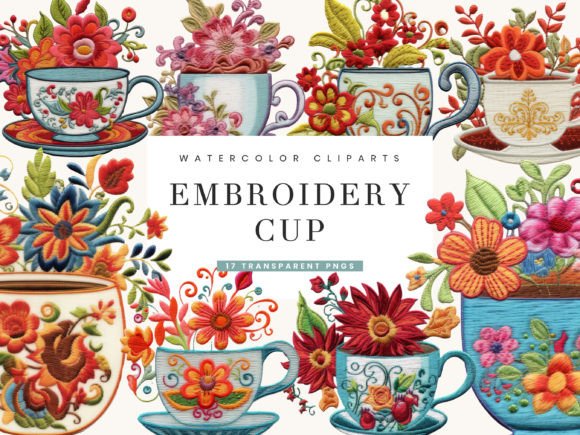
The bundle contains individual PNG files with transparent backgrounds, which are easy to use in any project. Visually, the designs carry a clean, modern aesthetic. The shapes are distinct, avoiding the overly complex gradients that plague many digital assets. For an embroidery designer, this simplicity is a virtue. Complex shading in a raster image does not automatically mean a good machine embroidery design. In fact, it often leads to excessive stitch density and thread breaks.
The mood these cups evoke is cozy and inviting. They feel right at home in projects centered around comfort, morning routines, and hospitality. Whether you are designing for a local coffee shop’s merchandise or creating personalized gifts for friends, the visual personality is approachable. The average size of 5-6 inches at their greatest measurement suggests these are statement pieces, not tiny, hidden details. This scale is crucial because it dictates where the design can live on a garment or home good without overwhelming the substrate.
From Screen to Stitch: A Real-Life Scenario
To test the viability of the Embroidery Cup Clipart Bundle, I imagined a specific client request: a set of custom embroidered tote bags for a boutique bakery. The client wanted something charming but professional. Using these graphics as a reference for digitizing—or using them directly if converted properly—I considered how the cup shape would interact with the canvas texture of a tote bag.
In this scenario, the clear outlines of the cup designs allow for crisp satin stitch borders or clean running stitch sketches. If I were to use a fill stitch for the body of the cup, the 5-6 inch size provides enough surface area to prevent the fabric from puckering excessively, provided the stabilizer is chosen correctly. For a tote bag design, durability is key. Customers will wash these items, so the design needs to hold up. The simplicity of the clipart suggests that it would digitize well into a low-density fill, ensuring the finished product remains soft and flexible rather than stiff and cardboard-like.
Versatility Across Product Lines
Beyond tote bags, this bundle offers significant flexibility for various embroidery projects. Consider sweatshirt embroidery. A 6-inch design fits perfectly on the left chest or as a larger back print on a crewneck. The transparent background of the PNGs makes it incredibly easy to place the graphic over different colored sweatshirts in your digital mockups before you even touch the machine. This saves time when presenting options to clients.
For baby embroidery, the scale might be too large for a onesie front, but it could work beautifully on a burp cloth or a nursery wall hanging. The key here is adaptation. As an experienced reviewer, I advise scaling down the design if moving to smaller garments, but always checking the resulting stitch count. A design that looks cute at 6 inches might lose its charm if shrunk to 2 inches without adjusting the stitch types.
Holiday embroidery is another strong suit. Imagine these cups adorned with seasonal elements—steam turning into snowflakes for winter, or flowers for spring. Because the base shape is simple, it serves as an excellent foundation for additional embellishments. You could easily combine these graphics with other design assets to create unique, layered looks for custom apparel or home decor.
Technical Considerations and Fabric Constraints
While the Embroidery Cup Clipart Bundle is versatile, there are areas where caution is required. The images are high quality, but they are still raster graphics. If you are converting these PNGs into an embroidery file using auto-digitizing software, be wary of jagged edges. Manual cleanup is often necessary to ensure smooth curves.
When working with textured fabrics like terry cloth towels or thick fleece, the details of the cup handle or rim might get lost. In such cases, simplifying the design further or using an applique design technique might be smarter. Applique allows you to use actual fabric for the cup shape, reducing stitch count and adding a tactile dimension that customers love. This is particularly effective for embroidered patch creation, where bulk needs to be managed carefully.
Dark fabrics present another challenge. Since these are clipart-style images, they likely rely on contrast. If you are stitching a light-colored cup on a black hoodie, you must ensure your thread colors pop. A white or cream thread against dark fabric requires precise tension settings to avoid seeing the backing material. Always test on scrap fabric first. Check the design in black and white mockups to see if the silhouette holds up without color reliance.
Commercial Viability and Brand Consistency
For Etsy sellers and small shop owners, consistency is brand currency. The Embroidery Cup Clipart Bundle offers a cohesive look that can help establish a recognizable style. If you specialize in kitchenware or cafe-themed goods, these graphics provide a solid foundation for your product line. They enhance the perceived value of a handmade product by looking intentional and polished.
However, before listing any small shop product, you must confirm licensing. The product description states these are PNGs for easy use, but it does not explicitly detail commercial rights for the stitched output. Always verify whether the license covers physical goods sold for profit. Assuming it does, these assets can significantly speed up your workflow. Instead of drawing every cup from scratch, you have a library of ready-to-use shapes that can be digitized or printed.
Practical Designer Notes
- Test on Scrap Fabric: Never run a new design on your final garment. Test on the same type of fabric to check for puckering or thread breaks.
- Check Stabilizer: For a 5-6 inch design, a medium-weight cut-away stabilizer is often best for stretchy fabrics like t-shirts, while tear-away may suffice for woven cottons.
- Review Stitch Density: If digitizing from these PNGs, keep the density moderate. High density on a large area can cause fabric distortion.
- Confirm Hoop Size: Ensure your machine’s hoop can accommodate the 6-inch maximum dimension. You may need a 6x10 or larger hoop depending on orientation.
- Inspect Small Details: Zoom in on the PNGs. If there are tiny specks or thin lines, remove them before digitizing to prevent needle jams.
In conclusion, the Embroidery Cup Clipart Bundle is a practical resource for designers who understand the bridge between digital art and textile craft. It is not just a collection of images; it is a toolkit for creating warm, inviting finished products. By respecting the technical limits of embroidery machines and choosing the right fabrics, you can turn these simple graphics into high-value items that resonate with customers. Whether for a personalized gift or a commercial batch, these designs hold up under scrutiny, provided you approach them with a designer’s eye and a stitcher’s patience.